
May Be Rolling Forward (And What I Did To Fix It)
If you suffer with pain between shoulder blades, a constant backache between shoulder blades, or even shoulder pain that radiates down arm, you are not alone.
As a former carpenter, years of heavy lifting, awkward positions and repetitive work slowly changed my posture without me even realising it. My right shoulder gradually rolled forward, my upper back became tight and painful, and eventually the pain started affecting everyday life.
Most people are told:
“It’s just posture.”
“It’s age.”
“Take painkillers.”Rest it.”
But in many cases, the real problem is that the shoulder blade and upper spine stop moving properly together.
That was certainly true in my case.
My Upper Back Pain Story
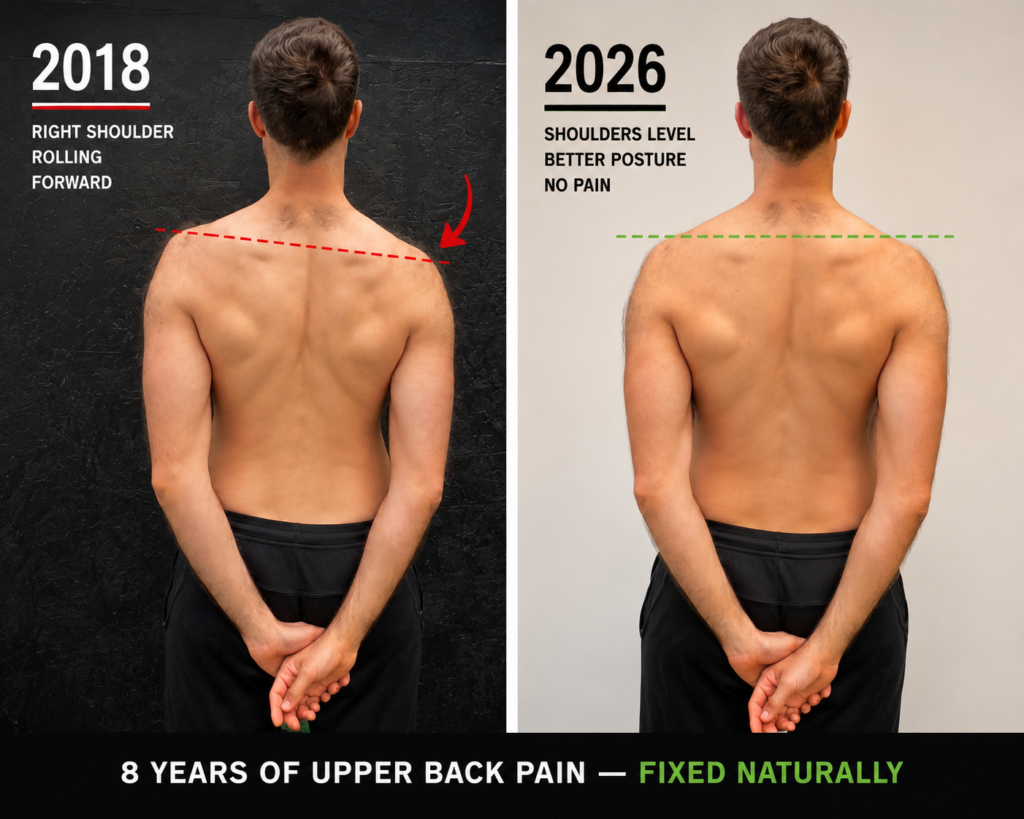
Back in 2018, my posture looked like this:
Right shoulder rolling forward
Uneven shoulder height
Tightness around shoulder blade
Chronic tension through upper back
Pain radiating into arm and neck
Over time, the pain became constant.
Like many people searching for answers online, I tried:
stretching,
massage,
foam rolling,
rest,
posture braces,
painkillers.
Some things helped temporarily.
Nothing actually fixed the underlying issue.
The breakthrough came when I started rebuilding:
scapular control,
thoracic mobility,
neck positioning,
shoulder mechanics,
and overall movement patterns.
Years later, the difference is huge.
2018 vs Now
8 Years Of Upper Back Pain — Fixed Naturally
Why Does Pain Between Shoulder Blades Happen?
In many people, the problem is not actually the painful spot itself.
Often the body is compensating for:
poor desk posture,
rounded shoulders,
weak upper back muscles,
stiff thoracic spine,
lack of movement,
repetitive lifting,
or years of muscle imbalance.
When one shoulder rolls forward, the muscles around the shoulder blade often become overloaded trying to stabilise the joint.
This can create:
burning pain between shoulder blades,
sharp pain near spine,
shoulder pain radiating down arm,
neck tightness,
headaches,
numbness or tingling,
upper trap tension.
Many people spend years treating the symptoms while the mechanics causing the problem remain unchanged.
3 Reasons Your Shoulder Rolls Forward And Causes Upper Back Pain
1. Weak Scapular Stability
The shoulder blade is supposed to glide smoothly across the rib cage.
When the stabilising muscles weaken, the shoulder often drifts forward.
This places huge stress on:
upper traps,
rhomboids,
rear shoulder,
neck muscles.
The result?
A constant dull ache or burning sensation between the shoulder blades.
2. Thoracic Spine Stiffness
If the upper back becomes stiff, the shoulder joint often compensates by moving incorrectly.
This is extremely common in:
office workers,
drivers,
tradesmen,
gym users,
and people who spend years sitting.
Improving thoracic movement is often a major part of reducing a backache between shoulder blades.
3. Forward Head Posture
Forward head posture changes the mechanics of the entire upper body.
As the head drifts forward:
shoulders round,
upper traps tighten,
nerves can become irritated,
arm pain may develop.
This is one reason many people experience:
shoulder pain radiating down arm,
tingling,
weakness,
or nerve-like symptoms.
3 Simple Exercises That Helped Me
1. Chin Tucks
A simple exercise that helps restore neck positioning.
How to do it:
Stand tall
Pull chin straight backwards
Keep eyes level
Hold 5 seconds
Repeat 10 times
This can help reduce pressure through the upper neck and shoulder area.
2. Wall Slides
Great for improving shoulder blade control.
How to do it:
Stand against wall
Keep elbows and wrists touching wall
Slowly slide arms upward
Avoid shrugging shoulders
This helps retrain shoulder positioning.
3. Thoracic Extensions
Improves upper back mobility.
How to do it:
Place foam roller across upper back
Support head
Gently extend backwards over roller
Repeat slowly
This often helps people with stiffness and tightness between shoulder blades.
When Shoulder Blade Pain Should NOT Be Ignored
Sometimes upper back pain may involve more serious issues.
You should seek medical advice if you experience:
severe weakness,
loss of balance,
bowel or bladder changes,
progressive numbness,
chest pain,
unexplained weight loss,
or worsening neurological symptoms.
Exercise is not appropriate for every condition.
The Biggest Mistake Most People Make
Most people chase the painful area itself.
But the body works as a chain.
The shoulder blade, neck, rib cage and thoracic spine all influence one another.
If you only massage the painful spot without fixing the movement problem underneath, the pain often returns.
That is exactly what happened to me for years.
Need Help Fixing Pain Between Shoulder Blades?
At Preservation Fitness Bristol I help people struggling with:
pain between shoulder blades,
shoulder pain radiating down arm,
neck tightness,
posture problems,
upper back stiffness,
and chronic muscular pain.
I offer:
1-to-1 coaching,
posture assessment,
movement correction,
rehabilitation guidance,
and WhatsApp support.
Message Me Directly On WhatsApp
If you want help understanding what may actually be causing your upper back pain, send me a message through my website here:
Preservation Fitness Contact Page
You do not have to simply “live with it.”
Sometimes the body just needs the right movement strategy.
FAQ 1
What causes pain between shoulder blades?
Pain between shoulder blades is commonly caused by poor posture, rounded shoulders, thoracic stiffness, muscle imbalance, or shoulder blade dysfunction.
FAQ 2
Can shoulder pain radiate down the arm?
Yes. Tight muscles, poor shoulder mechanics, or nerve irritation around the neck and shoulder can cause pain radiating down the arm.
FAQ 3
Can posture cause upper back pain?
Yes. Forward head posture and shoulders rolling forward can place excessive stress on the upper back and shoulder blade muscles.
FAQ 4
Are handstands good for posture?
When progressed safely, handstands can help improve shoulder stability, upper back strength, core activation, and posture control.
neck pain Bristol
shoulder pain when lifting arm
Shoulder Pain When Lifting Arm Bristol
personal trainer Bristol
contact page
